
Diamond Accents in Gemstone Jewellery: How to Choose the Perfect Pairing
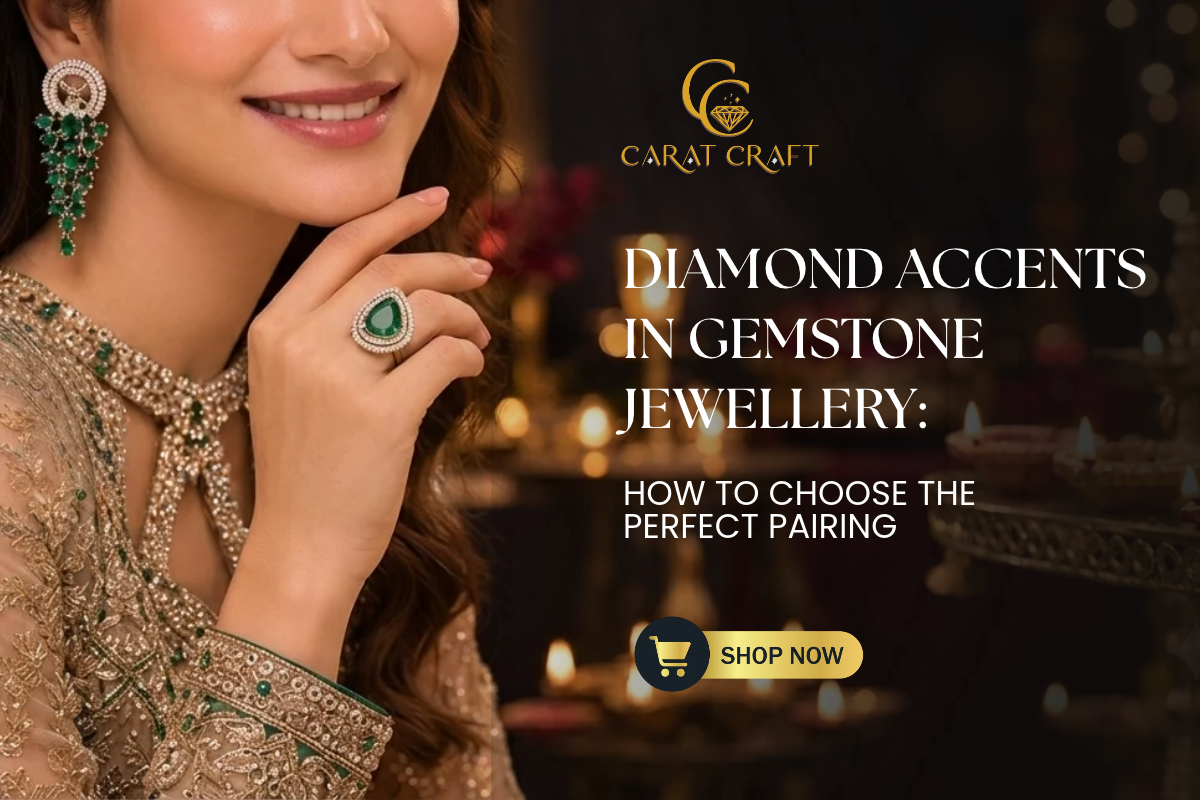
A deep blue sapphire is beautiful on its own. Surround it with a ring of sparkling diamonds and something changes: the blue looks richer, the piece catches light from every angle, and a simple ring becomes the one people ask about.
Pairing coloured stones with natural diamonds is one of the oldest ideas in fine jewellery, and it's still one of the most popular. Getting the balance right, though, takes more than adding a few diamonds around a gem. This guide shows you how to choose a pairing that looks harmonious, wears well and stays meaningful for years.
Why diamonds and coloured gemstones work so well together
Diamonds and coloured gemstones do different jobs, which is why they complement each other.
- Colour meets brilliance. A coloured gem brings depth and personality; diamonds bring sparkle. Together, the colour looks more saturated against the bright white light of the diamonds.
- Contrast frames the centre stone. Diamond accents draw the eye inward, so the gemstone becomes the clear focal point.
- Perceived size. A halo of diamonds can make a centre stone look noticeably larger than its actual measurements.
- Versatility. A touch of diamond makes coloured gemstone jewellery easier to wear with anything, from office wear to wedding outfits.
Popular designs for gemstone and diamond pieces
Halo
A single row of small diamonds surrounds the centre gemstone. It's the most popular way to add sparkle and size, and it suits round, oval and cushion-shaped gems especially well.
Three-stone
A coloured centre stone sits between two diamonds (or the reverse: a diamond centre flanked by two gems). Often given for anniversaries, the three stones are said to represent past, present and future.
Side stones and pavé bands
The gemstone takes centre stage while small diamonds line the band or shoulders. This gives a subtler sparkle and suits people who prefer an elegant, understated look.
Cluster
Several small gems and diamonds are grouped into a flower or geometric shape. Clusters feel vintage-inspired and work beautifully in earrings and pendants.
The setting style changes how a piece looks just as much as the stones do. For more on this, see our guide to how setting styles change the look of custom diamond bracelets.
Pairing guide: which gemstones shine brightest with diamonds
| Gemstone | Why it pairs well with diamonds | Suggested design |
|---|---|---|
| Blue sapphire | Diamonds make the blue look crisp and royal | Halo or three-stone ring |
| Ruby | White sparkle intensifies the red | Halo ring, cluster earrings |
| Emerald | Diamonds brighten the green and add light to a stone that's less sparkly by nature | Side-stone ring, halo pendant |
| Pink sapphire | A soft, romantic look, especially in rose gold | Halo or pavé band |
| Amethyst | An affordable way to get a bold colour with diamond sparkle | Statement pendant, cocktail ring |
| Tanzanite | Violet-blue tones look luxurious against white diamonds | Halo pendant or earrings |
| Pearl | Diamonds add sparkle to the pearl's soft lustre | Drop earrings, pendant |
If the gemstone carries personal meaning, such as a birth month, a child's birthstone or a stone from a family tradition, adding diamonds is a lovely way to turn it into an heirloom. Browse our gemstone jewellery collection for stones to start with.
How to match the diamonds to your gemstone
The diamonds in a coloured gemstone piece should support the gem, not compete with it. Keep these points in mind:
1. Get the size balance right.
Accent diamonds should be clearly smaller than the centre stone. As a general rule, keep the gemstone the focus. If the diamonds are too large, the piece loses its point of focus.
2. Choose the right diamond colour.
Diamond colour is graded from D (colourless) to Z (light yellow or brown). In white gold or platinum, near-colourless diamonds keep the sparkle bright and icy. In yellow gold, slightly warmer grades blend in naturally and can give better value.
3. Look for consistent cut and clarity.
In a halo or pavé band, many small diamonds sit side by side. If their colour and brilliance match, the piece looks even and polished; mismatched stones look patchy.
4. Insist on natural, certified diamonds.
Even small accent diamonds affect the overall quality of a piece. At Carat Craft, we work with GIA-certified diamonds. You can read why we choose only GIA-certified diamonds for our custom jewellery.
Choosing the metal for your pairing
The metal ties the gemstone and diamonds together, so choose it with both in mind.
-
White gold or platinum: best for blue sapphire, tanzanite and aquamarine, and makes the diamonds look as white as possible.
-
Yellow gold: warms up rubies, emeralds and citrine, and gives a classic, traditional feel.
-
Rose gold: perfect for pink sapphire, morganite and amethyst, with a soft, modern look.
-
Two-tone: a white-gold head on a yellow-gold band lets the diamonds stay bright while keeping the warmth of yellow gold.
Wearing and caring for gemstone and diamond jewellery
Diamonds are the hardest natural gemstone, but the coloured gem in your piece may be softer. Always care for a mixed-stone piece according to its most delicate stone.
-
Sapphires and rubies are very durable, so sapphire-and-diamond or ruby-and-diamond rings are excellent for everyday wear.
-
Emeralds, opals and pearls need gentler treatment. Choose protective settings, and avoid ultrasonic cleaners.
-
In a halo or pavé design, the small diamonds are held by tiny prongs. Have them checked once a year so you don't lose a stone.
-
In our warm, humid weather, lotion and sweat dull sparkle quickly. Clean your gemstone jewellery regularly with lukewarm water, mild soap and a soft brush. Like everyone shopping for gemstone jewellery Malaysia, you'll find that a little regular care goes a long way.
Quick checklist before you choose
-
Is the gemstone clearly the star of the piece?
-
Do the accent diamonds match each other in colour and sparkle?
-
Are the diamonds natural and certified?
-
Does the metal colour flatter both the gem and the diamonds?
-
Is the centre gem durable enough for how often you'll wear it?
Create a pairing that's uniquely yours
The best gemstone and diamond jewellery feels balanced: colour that speaks to you, sparkle that lifts it, and a design that suits your life. Whether it's a sapphire halo engagement ring, ruby and diamond earrings for a celebration, or a birthstone pendant framed in diamonds for someone you love, the right pairing turns a beautiful stone into a lasting treasure.
At Carat Craft, we design gemstone pieces with natural, GIA-certified diamonds, made to your vision. Visit us or get in touch to start creating yours.
Frequently Asked Questions
Do diamonds make a gemstone look bigger?
Yes. A diamond halo adds sparkle around the edge of the centre stone, which can make it look noticeably larger than its actual size.
Which gemstone is best with diamonds for an everyday ring?
Blue sapphire and ruby are the top choices. They're very hard and durable, and both look striking next to white diamonds.
What diamond colour should I choose for accent stones?
Near-colourless diamonds suit white gold and platinum. In yellow gold, slightly warmer grades blend in well and can give better value.
Can I add diamonds to a gemstone I already own?
Often yes. A jeweller can redesign the setting with a halo or side stones, as long as the gemstone is in good condition.