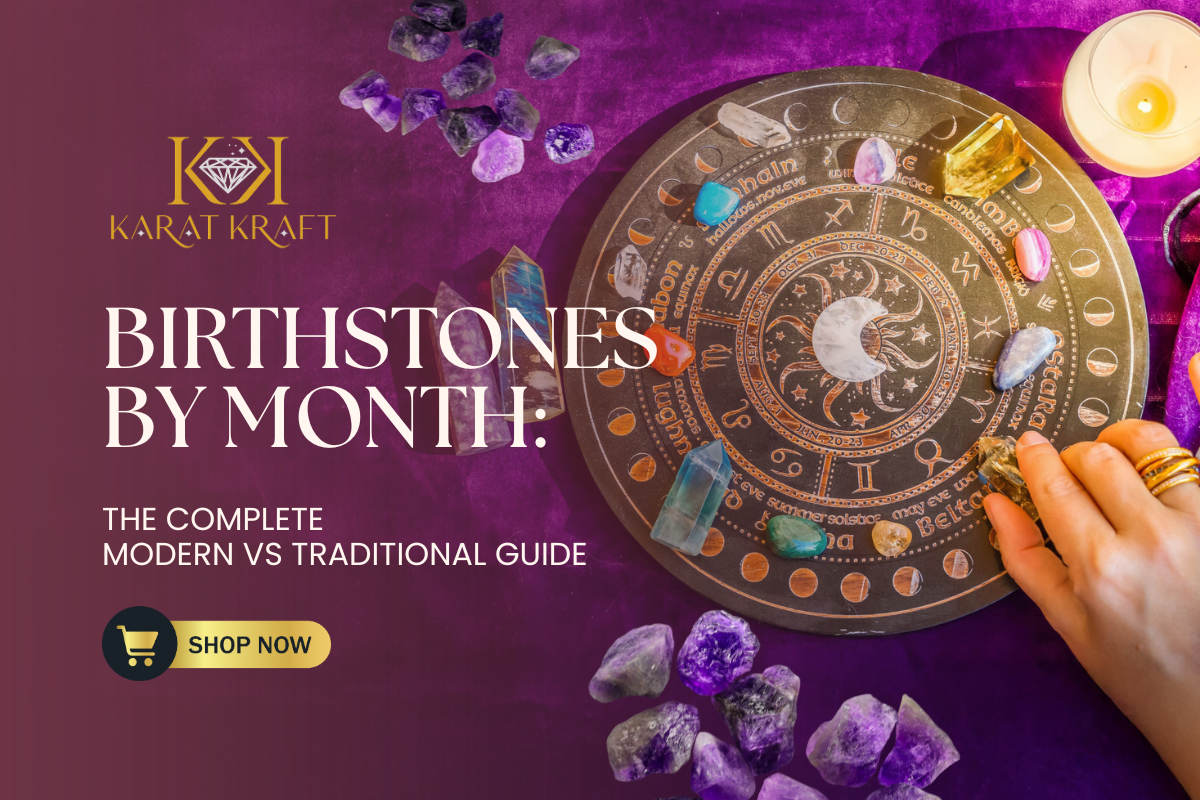
Birthstones by Month: The Complete Modern vs Traditional Guide
Whether you are shopping for a meaningful birthday gift, marking a personal milestone, or designing a bespoke heirloom, understanding birthstones by month unlocks a world of personal connection and timeless style.
While birthstones have ancient origins tied to astrological symbolism and historical gemstones, today’s jewelry landscape offers a rich blend of traditional heritage and modern elegance. As demand grows for bespoke, emotionally resonant pieces, incorporating individual birthstones into custom diamond jewellery has become one of the most popular ways to wear your personal story.
This comprehensive guide explores the complete month-by-month birthstone breakdown, durability considerations for daily wear, custom design trends, and expert advice for setting your favorite gems into fine jewelry.
Modern vs. Traditional Birthstones (What Is the Difference?)
Understanding the Evolution from Ancient Folklore to Modern Gemology Standards
When exploring birthstones by month, many readers are surprised to discover that several months offer more than one gem option. This distinction comes down to the fascinating evolution between traditional and modern birthstone charts:
-
Traditional Birthstones: These gems date back centuries, with roots traceable to biblical history, ancient trade routes, and Eastern and Western astrological systems. Traditional stones often included opaque or organic materials—such as Bloodstone, Turquoise, or Sardonyx—that held deep cultural and mystical significance in ancient times.
-
Modern Birthstones: In 1912, the National Association of Jewelers officially standardized the birthstone chart to create a cohesive, commercially accessible list. Modern birthstones prioritize transparent, durable gemstones that suit contemporary faceting techniques and daily jewelry settings.
-
Today, you do not have to choose strictly between historical tradition and modern style. Mixing both ancient lore and contemporary aesthetics allows for endless personal expression. To see how these trends are shaping current collections, explore our breakdown on Birthstones by Month in Modern Jewellery Design: What’s Trending in 2026.
How to Choose the Right Birthstone for Daily Wear Jewelry
A Practical Gemologist Guide to Hardness, Settings, and Metal Longevity
Before selecting a birthstone for high-impact pieces like engagement rings, daily stackable bands, or signature pendants, evaluating gemstone hardness is essential. Gemologists measure scratch resistance using the Mohs Hardness Scale (1 to 10), where 1 represents soft talc and 10 represents natural diamond.
Everyday Wear Heroes (8.0 to 10 Mohs)
Gemstones rated 8.0 and above are exceptionally tough and resistant to daily scratching:
- Diamonds (10): The hardest natural substance on Earth, perfect for lifetime daily wear.
- Rubies & Sapphires (9.0): Both belong to the corundum mineral family, offering supreme durability for rings.
- Topaz & Spinel (8.0): Highly durable options that easily withstand routine exposure to daily activities.
Moderate Durability (7.0 to 7.5 Mohs)
Stones in this range—such as Aquamarine, Amethyst, Citrine, Garnet, and Tourmaline—are resilient enough for routine ring and pendant wear, though they should be protected from sudden hard impacts and abrasive household chemicals.
Delicate & Specialty Care (Below 7.0 Mohs)
Gems like Emeralds (7.5–8.0 but naturally brittle), Opals (5.5–6.5), Tanzanite (6.5–7.0), and Cultured Pearls (2.5–4.5) require mindful wearing habits. They thrive best in protective settings—such as bezel encasements or halo borders—or in lower-contact pieces like earrings and necklaces.
To ensure your chosen gem retains its brilliance over decades, pairing it with the ideal metal is critical. For a complete breakdown of setting durability, maintenance, and metal tone matching, read our guide on Gold vs Silver: Which Metal Works Best for Birthstone Jewellery?.
Month-by-Month Highlights (Detailed Gemstone Breakdown)
Your Complete Reference for Modern & Traditional Gems, Colors, and Meanings
January: Garnet
- Modern & Traditional Stone: Garnet
- Color Spectrum: Rich Crimson Red, Tsavorite Green, Mandarin Orange, and Rhodolite Pink
- Durability: 6.5 to 7.5 Mohs Hardness
- Symbolism & Meaning: Protection, enduring friendship, vitality, and trust.
Gemstone Insights: While most people immediately picture a deep, pomegranate-red gem when thinking of January, the garnet family actually encompasses a full spectrum of colors. Derived from the Latin word granatus (meaning "seed"), garnets have served as protective talismans since ancient times. Their solid hardness makes them an exceptional choice for everyday solitaire rings and vintage-inspired gold pendants.
February: Amethyst
- Modern & Traditional Stone: Amethyst
- Color Spectrum: Soft Lilac to Deep Royal Purple
- Durability: 7.0 Mohs Hardness
- Symbolism & Meaning: Calmness, mental clarity, spiritual courage, and balance.
Gemstone Insights: Amethyst is the purple variety of quartz and was once considered as valuable as rubies and emeralds. Ancient Greeks believed amethyst guarded against intoxication and promoted a calm mind. Its rich purple tone contrasts beautifully against white, yellow, and rose gold settings, making it a favorite for modern geometric cocktail rings.
March: Aquamarine & Bloodstone
- Modern Stone: Aquamarine | Traditional Stone: Bloodstone
- Color Spectrum: Pastel Sky Blue to Deep Sea Blue (Aquamarine); Dark Green with Red Iron Inclusions (Bloodstone)
- Durability: 7.5 to 8.0 Mohs (Aquamarine); 6.5 to 7.0 Mohs (Bloodstone)
- Symbolism & Meaning: Harmony, serenity, protection for travelers, and vitality.
Gemstone Insights: Aquamarine derives its name from the Latin phrase for "water of the sea." Historically carried by sailors to ensure safe passage across stormy waters, aquamarine belongs to the beryl family. Its cool, calming blue tones make it a serene centerpiece for minimalist rings, while traditional bloodstone offers a bold, earthy alternative.
April: Diamond
- Modern & Traditional Stone: Diamond
- Color Spectrum: Colorless (D–F scale) to Warm Champagne, Fancy Yellow, Pink, and Blue
- Durability: 10.0 Mohs Hardness (Maximum scratch resistance)
- Symbolism & Meaning: Eternal love, invincibility, clarity, and strength.
Gemstone Insights: April babies enjoy the most iconic gemstone of all. Formed deep within the Earth’s mantle under intense heat and pressure over billions of years, the diamond is unmatched in brilliance and durability. Whether set as a central brilliant-cut solitaire or used as accent side stones framing colored birthstones, diamonds represent timeless elegance and enduring commitment.
May: Emerald
- Modern & Traditional Stone: Emerald
- Color Spectrum: Vivid Leaf Green to Deep Bluish-Green
- Durability: 7.5 to 8.0 Mohs Hardness (Requires protective settings due to natural internal fractures)
- Symbolism & Meaning: Rebirth, wisdom, intuition, and unconditional love.
Gemstone Insights: Beloved by Cleopatra and royal dynasties throughout history, emeralds represent the lush awakening of spring. Because emeralds naturally feature internal mineral inclusions (known as jardin), they require thoughtful setting techniques—such as protective bezel borders—to guard against edge chipping. A well-crafted emerald ring remains one of the most striking luxury statements in fine jewelry.
June: Pearl, Alexandrite & Moonstone
- Modern Stone: Alexandrite / Cultured Pearl | Traditional Stone: Moonstone
- Color Spectrum: Iridescent White/Cream (Pearl & Moonstone); Color-shifting Teal-Green to Ruby-Red (Alexandrite)
- Durability: 2.5–4.5 Mohs (Pearl); 6.0–6.5 Mohs (Moonstone); 8.5 Mohs (Alexandrite)
- Symbolism & Meaning: Purity, rare transformation, emotional balance, and luck.
Gemstone Insights: June is blessed with three distinct birthstones. Cultured pearls offer classic organic sophistication, while moonstone captivates with its ethereal blue shimmer. For those seeking ultimate rarity, Alexandrite is famous for its color-changing phenomenon—appearing emerald-green in natural daylight and shifting to a warm raspberry-red under indoor lighting.
July: Ruby
- Modern & Traditional Stone: Ruby
- Color Spectrum: Vibrant Crimson to Deep "Pigeon-Blood" Red
- Durability: 9.0 Mohs Hardness
- Symbolism & Meaning: Passion, vitality, wealth, and inner strength.
Gemstone Insights: Known in ancient Sanskrit as Ratnaraj ("King of Gems"), the ruby is the red variety of corundum. Renowned for its fire and exceptional hardness, ruby is rivaled only by diamond in strength. A high-clarity ruby set in yellow or rose gold commands instant attention, offering a vibrant burst of color that holds up perfectly to lifetime daily wear.
August: Peridot & Spinel
- Modern Stone: Peridot / Spinel | Traditional Stone: Sardonyx
- Color Spectrum: Vibrant Olive-Lime Green (Peridot); Cobalt Blue, Magenta, and Black (Spinel)
- Durability: 6.5 to 7.0 Mohs (Peridot); 8.0 Mohs (Spinel)
- Symbolism & Meaning: Light, good fortune, renewal, and harmony.
Gemstone Insights: Peridot is one of the few gemstones formed in volcanic lava and even found within meteorites. Its distinct yellowish-green color shines brightly under both artificial light and daylight, earning it the ancient Egyptian nickname "gem of the sun." For those desiring greater durability and intense color options, Spinel provides a brilliant modern alternative.
September: Sapphire
- Modern & Traditional Stone: Sapphire
- Color Spectrum: Royal Blue, Teal, Padparadscha Sunset Orange, Pink, and Yellow
- Durability: 9.0 Mohs Hardness
- Symbolism & Meaning: Loyalty, nobility, wisdom, and truth.
Gemstone Insights: While blue sapphire is the quintessential choice, sapphires naturally occur in every color of the rainbow except red (which is classified as ruby). Highly prized by royalty across centuries for crowns and engagement rings, sapphires combine incredible physical hardness with regal elegance, making them one of the most versatile choices for bespoke designs.
October: Opal & Tourmaline
- Modern Stone: Tourmaline / Opal | Traditional Stone: Opal
- Color Spectrum: Play-of-Color Rainbow Flashes (Opal); Vivid Pink, Watermelon, and Emerald-Green (Tourmaline)
- Durability: 5.5 to 6.5 Mohs (Opal); 7.0 to 7.5 Mohs (Tourmaline)
- Symbolism & Meaning: Creativity, hope, balance, and artistic inspiration.
Gemstone Insights: Opal is famous for its captivating "play-of-color," displaying internal flashes of red, blue, and green as light shifts across its surface. Because opals are comparatively soft, they benefit from low-impact settings like pendants. Meanwhile, pink or green tourmaline offers October babies a durable, highly saturated gemstone alternative for daily rings.
November: Topaz & Citrine
- Modern Stone: Citrine / Golden Topaz | Traditional Stone: Topaz
- Color Spectrum: Golden Honey Yellow, Amber-Orange, and Swiss Blue
- Durability: 7.0 Mohs (Citrine); 8.0 Mohs (Topaz)
- Symbolism & Meaning: Joy, abundance, warmth, and vitality.
Gemstone Insights: November birthstones capture the warm, golden hues of autumn. Citrine (a golden variety of quartz) brings sunny brilliance and affordability to large statement pieces. Topaz, available in warm golden tones as well as striking blues, offers superior hardness (8.0 Mohs), making it an ideal candidate for daily stackable bands.
December: Tanzanite, Turquoise & Zircon
- Modern Stone: Tanzanite / Blue Zircon | Traditional Stone: Turquoise
- Color Spectrum: Deep Velvet Violet-Blue (Tanzanite); Sky Blue with Matrix (Turquoise); Electric Blue (Zircon)
- Durability: 6.5 to 7.0 Mohs (Tanzanite); 5.0 to 6.0 Mohs (Turquoise); 7.5 Mohs (Zircon)
- Symbolism & Meaning: Wisdom, new beginnings, spiritual protection, and luck.
Gemstone Insights: December features a trio of stunning blue gemstones. Turquoise represents ancient tribal heritage and protection. Tanzanite—found exclusively near Mount Kilimanjaro in Tanzania—is prized for its intense color, shifting between blue, violet, and burgundy depending on the viewing angle. Blue zircon offers exceptional optical dispersion, sparkling with brilliance similar to a diamond.
Why Custom Diamond & Birthstone Jewelry Is Surging
The Shift Toward Bespoke Fine Jewelry, Certified Quality, and Personal Storytelling
While wearing a single standalone birthstone is classic, today’s jewelry lovers prefer combining multiple stones and certified diamonds into bespoke creations. Across Southeast Asia, discerning clients are turning toward personalized fine jewelry to capture family legacies and individual style.
In fact, understanding Why Custom Diamond Jewellery Is Becoming the Top Choice in Malaysia reveals how modern buyers prioritize master craftsmanship, GIA-certified diamonds, and unique personal storytelling over mass-produced, off-the-shelf pieces.
Whether you want to frame a September Sapphire with brilliant accent diamonds or set your monthly stone into a custom-designed band, tailored craftsmanship ensures your piece is one-of-a-kind. If you are looking for boutique craftsmanship, exploring diamond jewellery Malaysia options can help you bring your personalized vision to life.
Crafting Meaningful Gifts & Family Heirlooms
How Birthstones Connect Generations, Milestones, and Personal Expressions
Birthstones carry deep emotional resonance, making them ideal for commemorating life’s biggest celebrations. If you are selecting a piece for a loved one, discover Why Birthstones by Month Make Thoughtful Personalised Gifts for expert styling and sentiment ideas.
Furthermore, birthstones allow families to weave multiple generations into a single piece of fine jewelry. From multi-stone family bands to custom cluster necklaces featuring children's and parents' stones together, see how modern clients design meaningful pieces in our guide on Family Birthstone Jewellery: A Growing Trend Among Modern Families.
Frequently Asked Questions
Can I wear my birthstone every day?
Yes, provided the gemstone has suitable hardness for your chosen setting. Stones with a Mohs rating of 7.5 or higher (such as Diamonds, Sapphires, Rubies, and Aquamarines) effortlessly handle daily wear. Softer or more delicate gems (like Pearls, Opals, or Emeralds) are best worn in protective bezel settings, necklaces, or reserved for special occasion wear.
Why do some months have two or three birthstones?
Over time, jewelers and gemological associations updated the traditional birthstone chart to include options that are more durable, readily available, or varied in color and price point. Months like June, October, and December offer multiple choices to suit different aesthetics and budgets.
How do I combine multiple birthstones into one ring or necklace?
Working with a bespoke jeweler allows you to arrange multiple birthstones harmoniously. Popular techniques include asymmetric cluster settings, birthstone bar necklaces, or multi-stone family rings where individual birthstones are separated by brilliant accent diamonds for balance and sparkle.
What is the rarest and most expensive birthstone?
Alexandrite (one of June’s birthstones) and high-quality Emeralds (May) are among the rarest birthstones. Alexandrite is particularly prized for its natural color-shifting ability, changing from green in daylight to ruby-red under incandescent light. For timeless value and durability, April's Diamond and July's Ruby also remain top-tier investments.
Is it bad luck to wear a birthstone that isn't yours?
No, wearing a birthstone outside your birth month is not bad luck! While historical folklore attached specific astrological protection to your birth month stone, modern jewelry design encourages wearing stones based on personal aesthetic preference, favorite colors, or to honor loved ones (like wearing your child's or partner's birthstone).
How do I clean and care for my birthstone jewelry at home?
For hard stones like Diamonds, Sapphires, and Rubies, soak in warm water mixed with a few drops of mild dish soap, then gently scrub with a soft-bristled toothbrush. For soft or organic gems—such as Opals, Emeralds, and Pearls—avoid ultrasonic cleaners and harsh chemicals; simply wipe them clean with a soft, damp microfiber cloth.