
Gemstones Malaysia: A Birthstone Guide to Bridal Jewellery
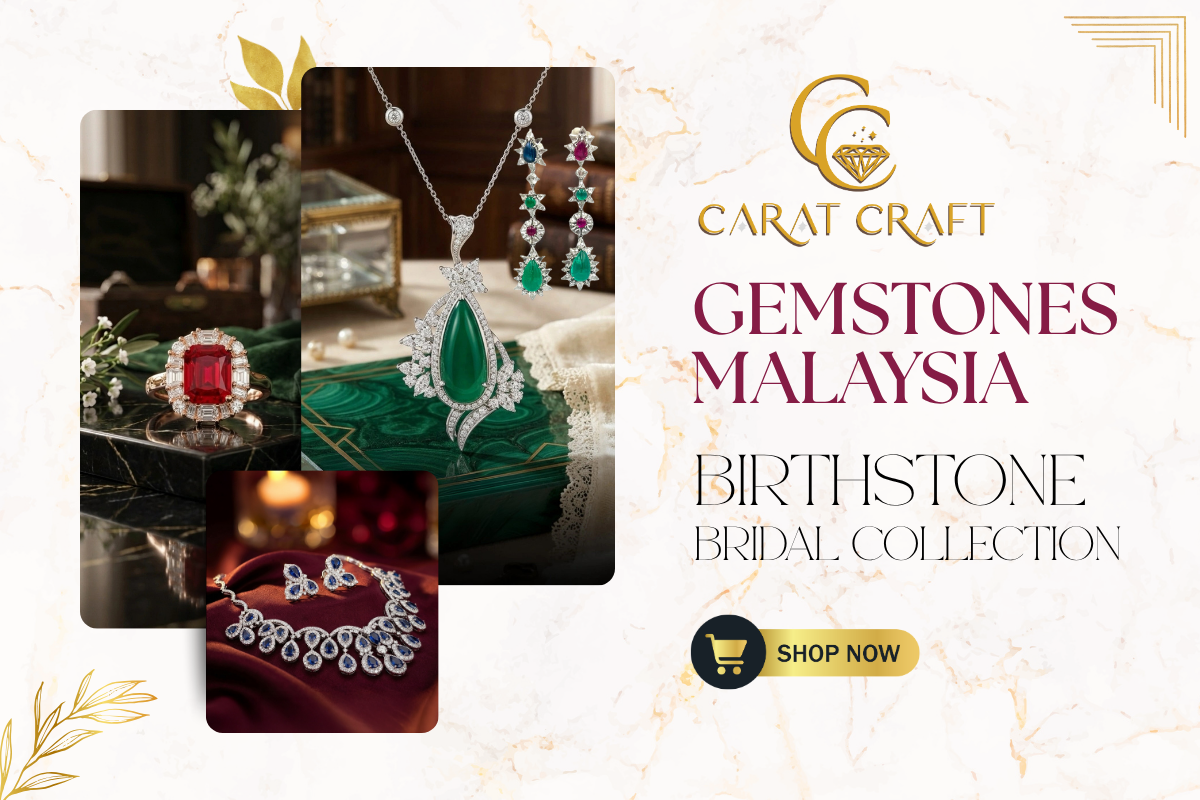
Malaysian couples and gift-buyers are no longer choosing between “classic” and “colourful.” More people are mixing the two, pairing gemstones that mean something to them with diamonds for a piece that feels personal rather than off-the-shelf. If you’ve stood at a jewellery counter unsure whether to go plain or add a splash of colour, this guide is for you — how gemstones are being chosen today, how birthstones factor in, and how to bring both worlds together in your wedding pieces.
Why Gemstones Are Showing Up in More Malaysian Jewellery Boxes
A decade ago, most engagement and wedding pieces followed the same script: a solitaire diamond, a plain gold or platinum band, nothing that strayed far from tradition. That script has loosened considerably.
Buyers now want their jewellery to say something about them, not just look expensive. A sapphire matching the month someone was born, or an emerald chosen because it was their grandmother’s favourite colour, carries a story a plain diamond can’t tell on its own. That’s part of why the gemstones Malaysia shoppers are asking for have shifted from purely decorative choices toward deeply personal ones.
Local jewellers have responded with more flexibility — smaller custom runs, mixed-stone settings, and pieces designed around a client’s request rather than pulled from a fixed catalogue.
Birthstones by Month: A Quick Primer Before You Shop
Before choosing a gemstone, it helps to know where the tradition actually comes from. The birthstone calendar assigns a specific stone (sometimes two or three) to each month of the year — garnet for January, amethyst for February, aquamarine for March, and so on through to turquoise or tanzanite for December.
Knowing this birth-month tradition gives you a starting point rather than a rulebook. Some buyers stick strictly to the traditional stone for their birth month; others prefer the “modern” alternative list that jewellers introduced later, largely because certain traditional stones are harder to source in wearable quality or don’t suit everyday jewellery as well.
Either way, this system is a useful shortcut when you’re buying for someone else and don’t know their taste in stones — start with their birth month, then work outward from there based on colour and budget.
Gemstones vs Diamonds: When Each One Makes Sense
Diamonds and gemstones aren’t really competing categories — they serve different purposes. Much of the diamond jewellery Malaysia buyers gravitate toward for engagement rings stays diamond-first because of resale value and certification, and that’s unlikely to change. Gemstones, meanwhile, allow for far more personality; a ruby or emerald can anchor a piece in a way a diamond can’t, simply because the colour itself carries meaning.
Few buyers pick strictly one or the other anymore. A common approach:
-
Diamonds for the primary stone in engagement rings, where durability and clarity matter most
-
Coloured gemstones as accent stones or side pieces
-
Birthstones reserved for anniversary gifts, push presents, or family jewellery
-
A mix of both in necklaces and bracelets, where wear-and-tear is less of a concern
This blended approach is one reason gemstones Malaysia buyers are asking for now often arrive as part of a larger, custom-designed piece rather than a standalone stone.
Making Birthstone Jewellery Malaysia Buyers Actually Wear
There’s a difference between a birthstone piece that sits in a drawer and one that gets worn every week. The pieces that get worn tend to share a few traits: smaller stone sizes, simpler settings, and metals that hold up to Malaysia’s humidity without constant polishing.
If you’re shopping for birthstone pieces that Malaysian families will actually use — a mother’s ring with each child’s stone, or a simple pendant marking a birth month — go smaller and simpler rather than bold and oversized. A discreet stone worn daily tends to mean more, over time, than a large one saved for special occasions.
Setting matters too. A bezel setting protects softer stones like opal or pearl from daily knocks, while a prong setting suits harder stones like sapphire or ruby that can handle more exposure.
Bringing Gemstones Into Your Bridal Set
Wedding jewellery is where this blending trend is most visible right now. Instead of an all-diamond set, many couples ask for a single coloured stone worked into an otherwise diamond-led design — a sapphire halo around a diamond centre, or emerald accents flanking a diamond pendant.
This works well for a diamond-led bridal set because it keeps the formality diamonds bring while adding a detail specific to the couple. Some choose their birthstones, others pick a colour tied to a personal memory, and some simply want a design that doesn’t look identical to every other bridal set at the counter.
If you’re considering this route, talk to your jeweller early rather than after the diamond has already been chosen. Stone pairing, especially with hardness and colour balance, is easier to plan for upfront than to retrofit later.
What to Check Before You Buy
A few practical points worth confirming before you commit to any gemstone purchase:
-
Ask whether the stone is natural, treated, or lab-created, and get this in writing
-
Check the setting is appropriate for the stone’s hardness — softer stones need more protection
-
Confirm the metal (gold, white gold, or platinum) suits Malaysia’s climate for daily wear
-
If it’s a birthstone piece, double check the month-to-stone pairing you want, since modern and traditional lists sometimes differ
None of this needs to be complicated, but it does need to be asked upfront rather than assumed.
Why Buyers Trust Karat Kraft for This
Karat Kraft works with GIA-certified diamonds and sources gemstones Malaysia clients can trust, vetted with the same scrutiny as their diamonds. Their design process is built around custom requests rather than fixed catalogues, so a birthstone-and-diamond combination, or a gemstone accent on a wedding piece, is treated as a starting brief rather than an unusual ask. For anyone unsure where to start, a rough idea — a birth month, a colour, an old family piece to reference — is usually enough for their team to build something around.
Conclusion
Choosing gemstones today isn’t about picking colour over tradition, or diamonds over personality — it’s about combining both in a way that reflects the person wearing the piece. Whether you’re exploring birthstone traditions for a family gift or adding a personal touch to your bridal set, the goal is the same: a piece that feels considered, not generic.
Frequently Asked Questions
1. Are gemstones as durable as diamonds for everyday jewellery?
It depends on the stone. Sapphires and rubies are quite durable and suit daily wear, while softer stones like opal or emerald need more careful settings and occasional extra care.
2. Can I combine my birthstone with a diamond in an engagement ring?
Yes, this is increasingly common. A diamond centre stone with a birthstone accent or halo is a popular way to personalise an otherwise classic design.
3. What if my birth month has more than one traditional stone?
Several months have both a traditional and a modern option. Either is considered correct — the choice usually comes down to colour preference and stone availability.
4. Is buying gemstones in Malaysia more affordable than importing them?
Sourcing locally through an established jeweller often works out more practical, since you can inspect the stone in person and avoid additional import or customs complications.
5. How do I know if a gemstone is treated or natural?
Ask your jeweller for written documentation on the stone’s origin and any treatments. A reputable jeweller will disclose this without hesitation.